Ledger Live Login: Account Access System
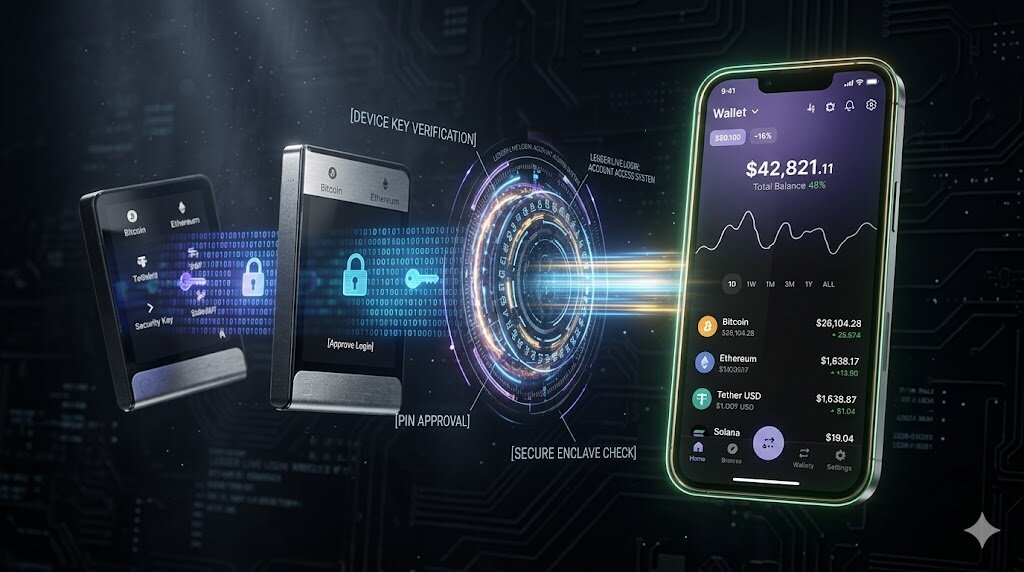
Ledger Live login differs fundamentally from traditional account access patterns because the system relies on hardware device possession rather than software-stored credentials. The Ledger Live login process requires users to connect their physical Ledger device and enter a PIN directly on the device hardware, with no username, email, or password involved in the access flow.
The Ledger Live login model provides security advantages that traditional credential-based systems cannot replicate because the access requirements are physically bound rather than information-based. Understanding how the login process works clarifies why the hardware-based approach provides structural security advantages over conventional authentication methods that the broader crypto ecosystem commonly uses.
Ledger Live Login Process Mechanics
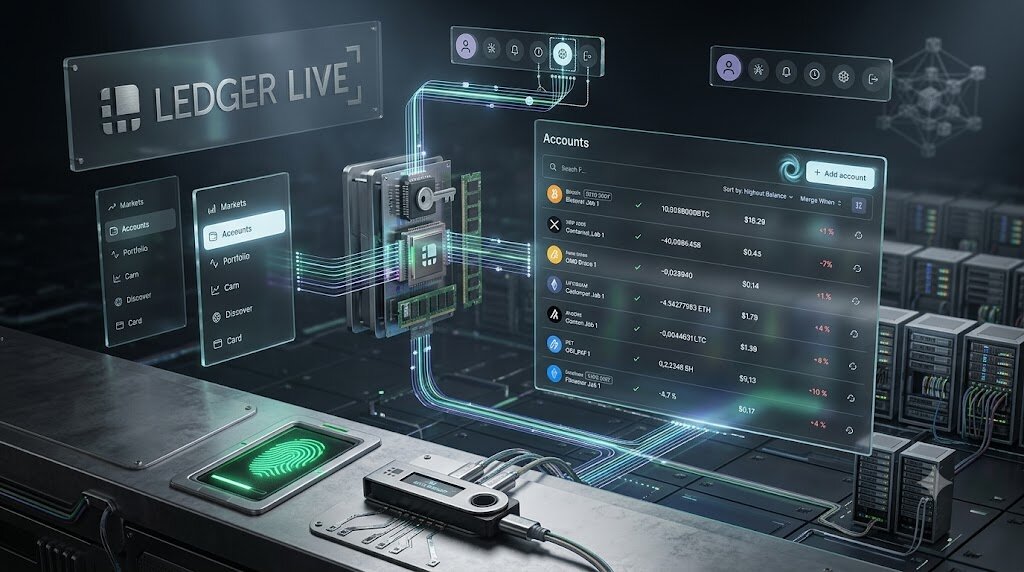
Ledger Live login process mechanics cover how the access system actually works during normal daily usage. Understanding the mechanics clarifies what users experience when they access their accounts.
Device Connection and Recognition
Device connection and recognition starts the Ledger Live login process when users physically connect their hardware device. The Ledger Live application detects the connected device through USB or Bluetooth, with the application recognizing the specific device and its associated accounts. The connection step represents the physical access requirement that traditional login systems lack, since users must possess the actual hardware rather than just knowing credentials. The Ledger Live application shows the connection status clearly, with users seeing when their device is properly connected and ready for the PIN entry that follows.
PIN Verification on Device
PIN verification on the device completes the Ledger Live login by confirming the user's authorization to access the connected device. The Ledger Live login PIN entry happens entirely on the hardware device's own controls, with the PIN never transmitted to the connected computer or the Ledger Live application. The PIN entry on the device provides protection against keyloggers and other software-based credential theft since the PIN travels through hardware controls that malware on the computer cannot intercept. The device enforces a three-attempt limit before wiping itself, preventing brute-force attacks against the PIN regardless of what software attackers might deploy on connected computers.
Session Management and Termination
Session management in the Ledger Live login system governs how long access persists after initial authentication. The Ledger Live session remains active while the hardware device stays connected and the application remains running, with disconnection or application closure terminating the session. Unlike traditional systems that maintain sessions through cookies or tokens, the Ledger Live session depends on the ongoing physical device connection. Users who disconnect their device must reconnect and re-enter their PIN for any subsequent access, with no persistent login state surviving device disconnection. The session model means unattended computers with Ledger Live open but devices disconnected cannot access accounts, providing automatic protection against unauthorized access scenarios.
Ledger Live Login Security Properties
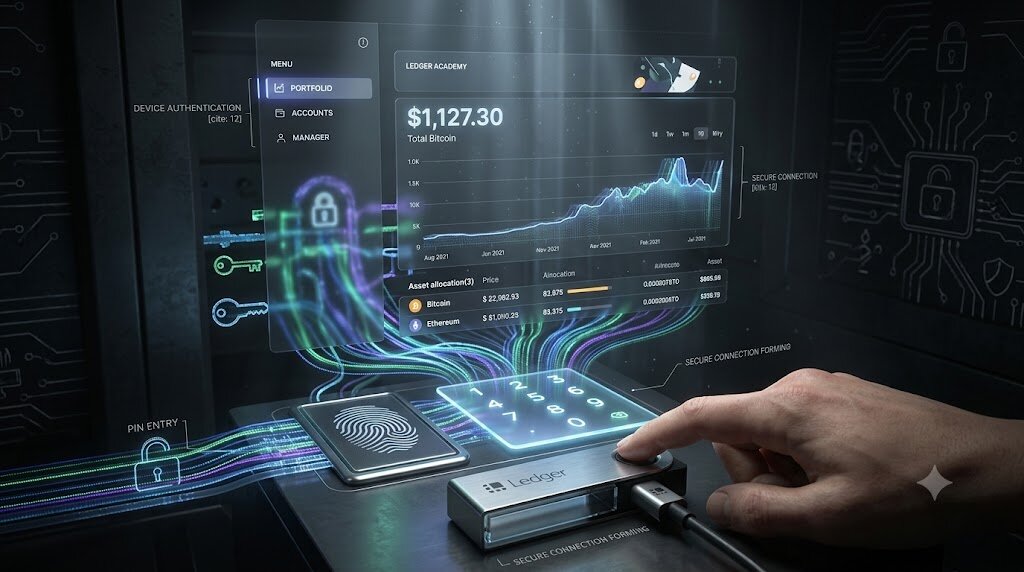
Ledger Live login security properties arise from the hardware-based access model rather than traditional credential-based authentication. Understanding security properties clarifies why the approach provides structural advantages.
Password Theft Immunity
Password theft immunity represents a fundamental Ledger Live login security advantage. The Ledger Live login doesn't use passwords, so password theft, credential stuffing, database breaches, and various other password-related attacks simply don't apply. Attackers cannot steal Ledger Live login credentials through phishing since there are no credentials to phish in the traditional sense. The immunity extends across the entire category of password-related attacks that affect traditional services, with the hardware-based model eliminating these attack vectors architecturally rather than defending against them individually.
Phishing Protection Through Hardware
Phishing protection through hardware means the Ledger Live login model protects users from credential-harvesting attacks. Users physically confirm transactions on their hardware devices, with the device displays showing actual transaction details independent of what websites or applications display. The hardware-based confirmation provides phishing protection that traditional login systems struggle to replicate, since the protection doesn't depend on users correctly identifying legitimate websites but rather on the architectural separation between credential possession and operation authorization.
The major Ledger Live login security characteristics include the following:
- Hardware device possession as primary access requirement
- PIN verification through device controls bypassing software attacks
- Three-attempt limit preventing PIN brute force attempts
- Session termination through disconnection and inactivity
- Reconnection workflows requiring fresh hardware verification
- Password theft immunity through hardware-bound credentials
- Phishing protection through on-device transaction confirmation
- Recovery phrase backup enabling access continuity across device loss
Ledger Live Login Alternative Scenarios
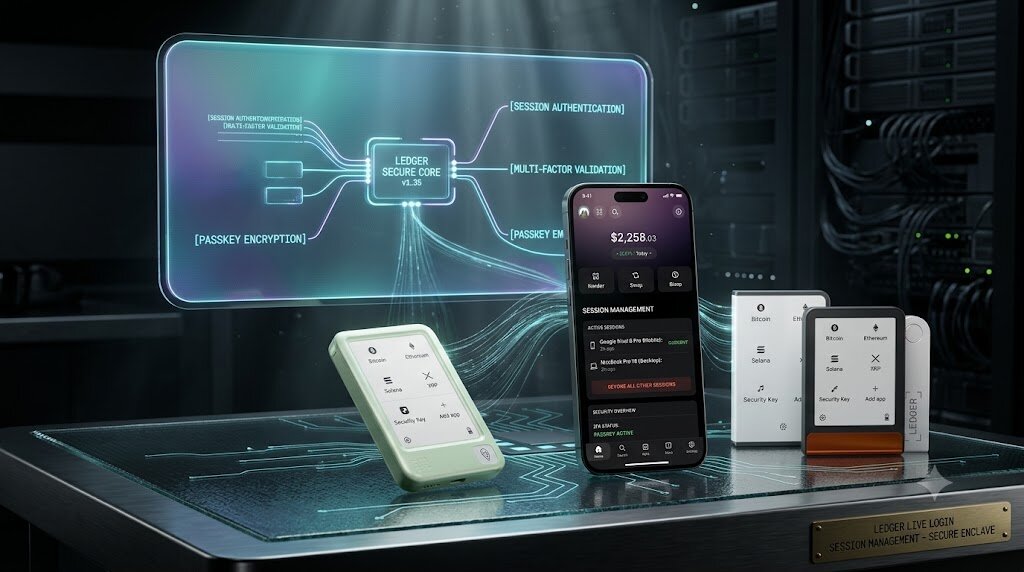
Ledger Live login alternative scenarios cover situations beyond standard daily access. Understanding alternatives clarifies how the access model handles various edge cases.
New Device Setup Access
New device setup represents the Ledger Live login scenario where users initialize new hardware. The Ledger Live initial setup involves generating a new recovery phrase, setting a PIN, and establishing the device for ongoing usage, with the Ledger Live application coordinating the setup process. New users complete this setup once per device, with the resulting configuration then supporting standard login operations from then on. The setup flow differs from regular login since it establishes the credentials that subsequent logins will use, with the device itself walking users through the steps that create the access infrastructure.
Recovery Phrase Restoration
Recovery phrase restoration provides Ledger Live login access when users need to restore wallets to replacement devices. The Ledger Live application supports the recovery flow where users enter their recovery phrase on a new or reset device, with the device then deriving the same accounts the original device contained. Recovery restoration represents the backup access path for scenarios where original devices get lost, damaged, or otherwise unavailable. The Ledger Live login through recovery restoration depends entirely on users having maintained their recovery phrase backups appropriately, since the phrase represents the only path to recovering access in serious device loss scenarios.
Multiple Device Access

Multiple device access in Ledger Live login lets users access accounts from different devices. The Ledger Live multiple device model lets users connect different Ledger devices to different computers without each device knowing about others, with all devices derived from the same recovery phrase accessing the same accounts. Some users maintain backup devices for redundancy, with multiple initialized devices providing access continuity if any single device fails. The Ledger Live login from any properly configured device supports identical account access since the underlying recovery phrase determines what accounts exist regardless of which specific hardware accesses them.
Platform Characteristics
Common Ledger Live login characteristics across the access system include:
- Hardware device possession required for any account access
- PIN verification through device physical controls
- No traditional username and password credentials
- Three-attempt PIN limit before device wipe activation
- Session termination through disconnection or inactivity
- Recovery phrase as ultimate backup access mechanism
- New device setup as one-time initialization flow
- Multiple device support through shared recovery phrases
- Application password as optional UI-level lock
- Phishing protection through on-device transaction confirmation